A fire is one of the most traumatic and destructive events a homeowner can experience. In a matter of minutes, flames can consume years of memories, damage structural components, and render a home unsafe and uninhabitable. But even after the fire is extinguished and the firefighters have departed, the damage continues through smoke, soot, water from suppression efforts, and the progressive deterioration of compromised materials.
Fire Damage Restoration Riverside is the comprehensive process of cleaning, repairing, and rebuilding a property after it has been affected by fire. For residents of Riverside, California a region that also faces periodic wildfire threats in addition to residential fire risks understanding this process is essential. Knowing what restoration entails, what to expect at each stage, and why professional intervention is critical can help homeowners navigate an overwhelming situation with greater clarity and confidence.
The Full Scope of Fire Damage
A common misconception is that fire damage is limited to what the flames physically touched. In reality, the destruction caused by a residential fire extends far beyond the areas of direct combustion.
Smoke and Soot Damage: When materials burn, they release complex chemical compounds that travel as smoke and settle as soot on surfaces throughout the structure including areas entirely untouched by flames. Soot particles are corrosive; within hours of a fire, they begin to permanently stain fabrics, corrode metal surfaces, and etch glass. Synthetic materials produce particularly caustic soot that can cause lasting damage if not removed promptly.
Water Damage: Firefighting efforts whether from hose lines, sprinkler systems, or extinguisher agents introduce large volumes of water into the structure. This secondary water damage compounds the fire damage, soaking structural components, saturating flooring, and creating conditions favorable to mold growth.
Structural Damage: Beyond obvious charring and burning, fire weakens the structural integrity of affected areas. Metal fasteners warp under heat, wood framing chars and may lose its load-bearing capacity, and concrete can spall and crack. Hidden structural damage in areas that appeared to survive the fire relatively unscathed can pose serious safety risks.
Odor Penetration: Smoke odor penetrates deeply into porous materials insulation, drywall, wood, upholstery, and even clothing stored in unaffected rooms. This persistent odor is not merely unpleasant; it is a chemical indicator that harmful compounds remain present. Simply airing out the property is insufficient to eliminate it.
Immediate Steps After a Fire
According to FEMA, beginning the cleanup and restoration process within the first 24 to 48 hours after a fire significantly reduces total damage and restoration costs by preventing permanent staining, mold growth, and structural deterioration. However, returning to a fire-damaged property carries real risks, and safety must come first.
Property owners should only re-enter a fire-damaged structure after it has been declared safe by fire authorities. Structural instability, compromised electrical systems, residual combustion products, and carbon monoxide are all hazards that may persist after a fire. Once safety is confirmed, contacting a professional fire damage restoration company and notifying the insurance provider should be the immediate priorities.
Documentation is also critical at this early stage. Photographing and recording all visible damage before any cleanup begins creates a record that supports insurance claims and ensures that nothing is inadvertently cleaned or discarded before it can be assessed.
The Fire Damage Restoration Process
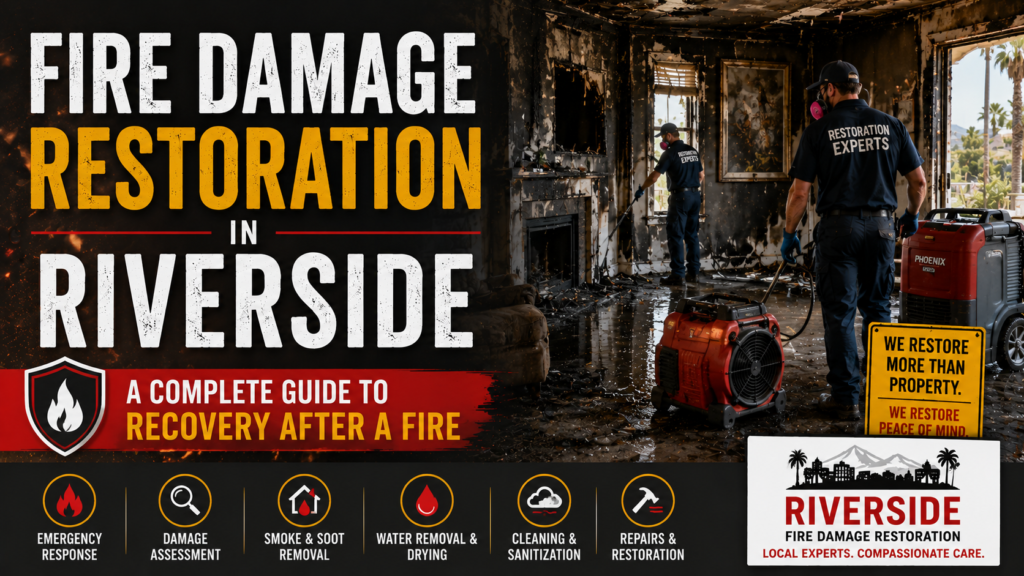
Fire damage restoration is a multi-phase process that typically involves the following stages.
Phase 1 Emergency Assessment and Property Securing: Restoration professionals begin with a comprehensive assessment of the fire damage, evaluating the extent of flames, smoke, soot, and water damage throughout the property. If windows, doors, or sections of the roof have been compromised, emergency board-up and tarping services are performed immediately to secure the structure against weather, vandalism, and unauthorized entry. This protective step also prevents further moisture intrusion during the restoration process.
Phase 2 Water Damage Mitigation: Because firefighting efforts introduce substantial water into a structure, water damage mitigation is one of the first active steps in restoration. Standing water is extracted, affected materials are assessed for salvageability, and industrial drying equipment is deployed. This phase follows the same principles as standalone water damage restoration and is essential to preventing mold development on top of fire damage.
Phase 3 Soot and Smoke Removal: Soot and smoke residue are among the most challenging aspects of fire damage to address effectively. Dry cleaning sponges and specialized chemical cleaners are used on hard surfaces, while vacuum techniques approved for fire restoration remove soot from soft materials. The specific cleaning approach varies based on the type of soot wet soot (from slow-burning, smoldering fires) behaves differently from dry soot (from fast-burning fires) and requires different methods.
Phase 4 Odor Elimination: Eliminating smoke odor requires more than surface cleaning. Restoration professionals use several advanced technologies for this purpose. Thermal fogging involves releasing a deodorizing fog that penetrates the same porous materials smoke did, neutralizing odor molecules at their source. Ozone generators produce ozone gas that chemically reacts with and neutralizes smoke compounds. Hydroxyl generators use UV light to create hydroxyl radicals that break down odor-causing molecules a safer alternative in occupied or partially occupied spaces.
Phase 5 Structural Cleaning and Decontamination: Walls, ceilings, floors, and structural components are thoroughly cleaned and treated with antimicrobial agents where necessary. In areas where structural damage is severe, selective demolition may be required to remove irreparably compromised materials before restoration can proceed.
Phase 6 Reconstruction and Rebuild: The final phase of fire damage restoration involves rebuilding what was destroyed or removed. Depending on the severity of the fire, this may range from patching and repainting walls to full structural reconstruction involving new framing, insulation, drywall, flooring, roofing, and finishes. Rebuilding a fire-damaged home in Riverside must comply with current California building codes which may be stricter than the codes in force when the original structure was built.
How Long Does Fire Damage Restoration Take?
The timeline for fire damage restoration varies significantly based on the severity and extent of the damage. Minor fires such as a contained kitchen fire that was quickly suppressed may require only a few days of cleaning, deodorizing, and surface restoration. Moderate fires that affect one or more rooms but leave the structure largely intact may take several weeks.
Major fires that cause significant structural damage can result in restoration timelines of several months to a year or more. Full structural rebuilds following severe fires are essentially new construction projects in terms of scope and timeline.
Working with an experienced restoration company that provides a detailed assessment and realistic timeline after the initial inspection helps property owners plan for temporary housing arrangements and understand what to expect throughout the recovery process.
What Can Be Salvaged After a Fire?
One question that weighs heavily on homeowners after a fire is what can be saved and what must be discarded. Non-porous materials glass, certain metals, ceramics often clean up well and can be retained. Hard materials like hardwood floors may be salvageable depending on the extent of charring and soot penetration. Appliances that were not directly affected by flames may also be restorable, though they should be professionally inspected before use.
Porous materials mattresses, upholstered furniture, pillows, and highly absorbent items are more problematic. Smoke compounds penetrate deeply into these materials and may not be fully removable, making replacement the safer and more practical choice.
Personal items, documents, photographs, and irreplaceable belongings require specialized content restoration services. Professional restoration companies have the expertise and equipment to recover far more than a homeowner might expect using ultrasonic cleaners, ozone chambers, and document recovery techniques to rescue what matters most.
Fire Damage Restoration and Insurance
Standard homeowner’s insurance policies in California generally cover fire damage restoration, including structural repairs, smoke cleanup, soot removal, and personal property replacement. Temporary housing costs may also be covered while the home is being restored.
Navigating the insurance claims process in the aftermath of a fire can be stressful. Property owners are encouraged to document all damage thoroughly, keep records of all communications with the insurance company, and avoid discarding damaged belongings until the claims adjuster has completed their assessment.
Working with a fire damage restoration company that has experience coordinating with insurance carriers can streamline the claims process significantly, ensuring that the full scope of restoration work is properly authorized and covered.